It is our mission to give as many children as possible the opportunity to take part in sport and physical activity, with special attention to children for whom sport is not a given.
Our sports initiatives aim to make a meaningful difference in the areas of:
- Physical and mental health
- Empowerment
- Inclusion
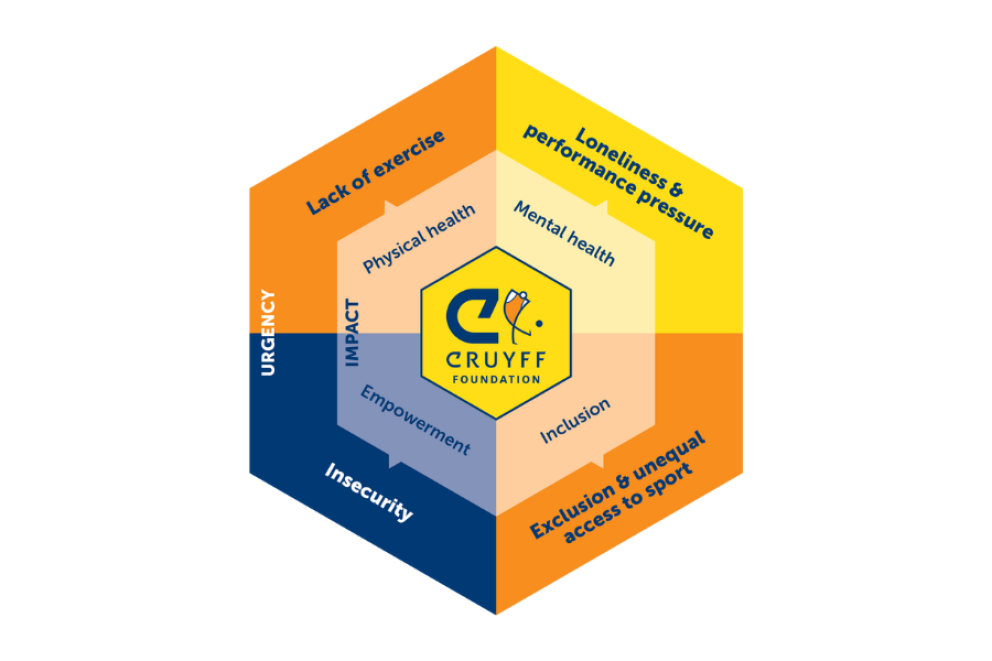
Through this, we address global challenges such as growing physical inactivity, mental health issues caused by loneliness, pressure to perform and insecurity among children and young people, as well as social exclusion and unequal access to sport.
IMPACTMODEL
Our impact model shows where the social urgency lies and which themes are central to our approach. In doing so, we apply a specific focus on impact and contribute to real change.
Our impact in a glance
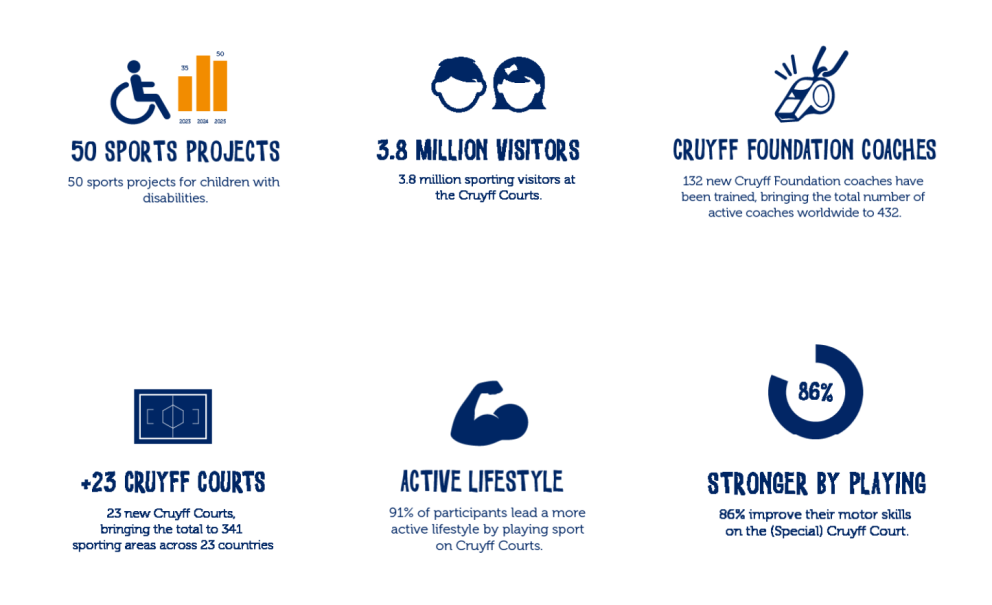
Key impact numbers
Theory of change
Our work is based on the Theory of Change: a strategic framework that maps out the change we want to achieve in the long term. With the Theory of Change, we map out how our activities contribute to broader societal changes, such as improved health, increased empowerment and inclusion. This allows us to make targeted adjustments, where necessary, to increase our impact.
Sustainable Development Goals
The 17 Sustainable Development Goals (SDGs) of the United Nations aim to create a greener, fairer and better world. Our projects directly contribute to the realisation of four SDGs.
1. URGENCY: LONELINESS & PERFORMANCE PRESSURE
Worldwide, children and youngsters are not getting enough physical activity, particularly those aged 12 to 17. Girls are consistently less active than boys. At the same time, screen time is increasing. In the Netherlands, people spend an average of more than nine hours a day sitting down, often in front of a screen. This global trend is leading to a less active lifestyle, with consequences for both health and social skills.
OUR IMPACT ON: PHYSICAL HEALTH
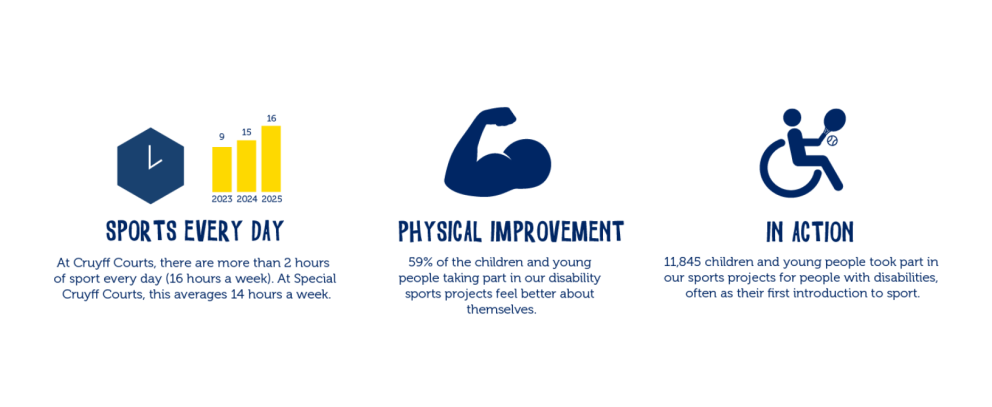
Exercise is essential, but far from guaranteed.
WHAT DOES SPORT DO PHYSICALLY?
Regular physical activity leads to a fitter body and increased energy levels. By encouraging children and young people to take part in sport, we help them stay physically active on a regular basis. This not only supports them in maintaining an active lifestyle, but also lays the foundation for healthy habits they can sustain throughout their lives.
2. URGENCY: LONELINESS & PERFORMANCE PRESSURE
Mental health is becoming an increasingly significant challenge for young people worldwide, particularly for those with disabilities.
OUR IMPACT ON: MENTAL HEALTH
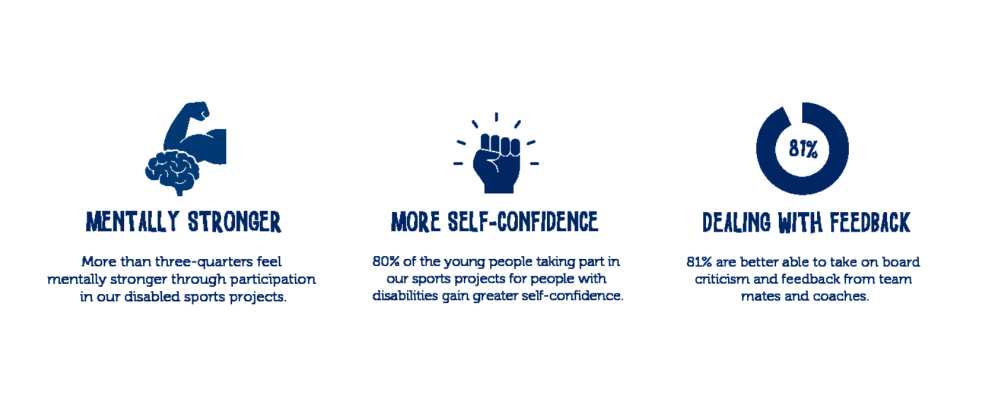
Sports make the difference: from loneliness to belonging.
WHAT DOES SPORT DO TO OUR MENTAL STATE?
Sport brings children together. They meet others, experience moments of success, and build self-confidence. This helps to reduce insecurity and loneliness, while also making them more resilient in everyday life.
3. URGENCY: INSECURITY
Many young people are concerned about their future and often feel uncertain about their place in society. For example, 15% of secondary school pupils have little to no confidence in the future.
OUR IMPACT INCREASES EMPOWERMENT
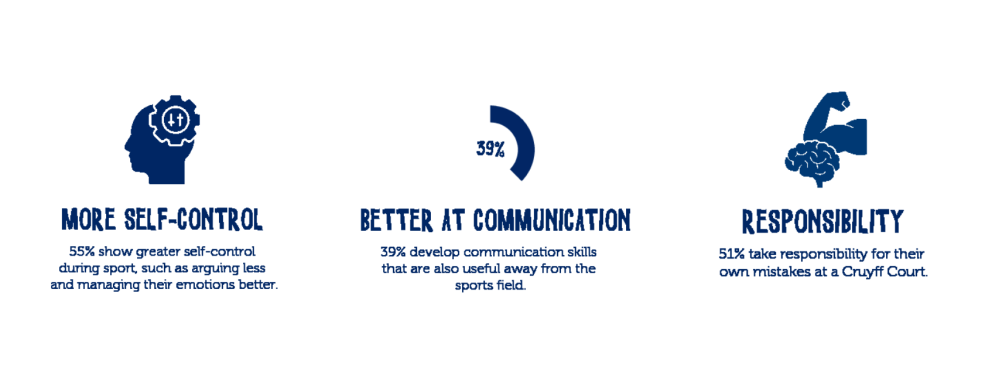
Sport builds confidence – in yourself and in the future.
WHAT DO WE MEAN BY EMPOWERMENT?
Many children do not naturally believe in their own abilities or future. In particular, children growing up with fewer opportunities or facing adversity often lack the confidence and space to develop themselves.
Through sport and physical activity, they discover their strengths and develop new skills. With structure and positive encouragement, they grow in self-confidence and belief in their own potential. In this way, they learn to set goals, take initiative, and make progress towards their future.
4. URGENCY: EXCLUSION & UNEQUAL ACCESS TO SPORTS
Not every child has the same opportunity to take part in sport. Children with a disability, in particular, have less access to sport. One in four children with a disability does not participate in sport at all, compared with 13% of children without a disability.
OUR IMPACT ON: INCLUSION
A game is only fair when everyone can participate.
OPPORTUNITIES FOR EVERYONE
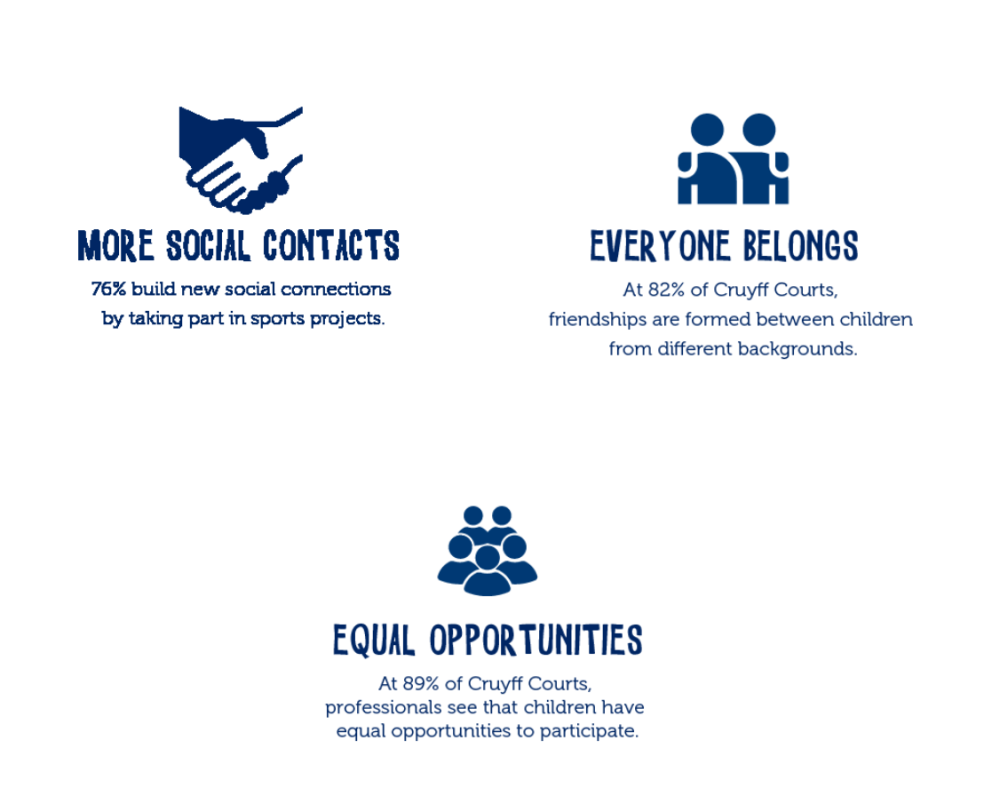
Sport brings children together and breaks down barriers. Through our projects, children are given the opportunity to take part, regardless of their background or abilities. In this way, they learn to value differences, and a stronger, more connected community is created.